Skeptophilia (skep-to-fil-i-a) (n.) - the love of logical thought, skepticism, and thinking critically. Being an exploration of the applications of skeptical thinking to the world at large, with periodic excursions into linguistics, music, politics, cryptozoology, and why people keep seeing the face of Jesus on grilled cheese sandwiches.
Showing posts with label genetics. Show all posts

Monday, December 8, 2025

Genetic walkabout

It's astonishing how linked we all are -- and how we often don't even realize it.

Long-time readers of Skeptophilia might recall that I was born and raised in southern Louisiana, but have lived in upstate New York for over three decades.  I moved here in 1992 for a job, knowing exactly zero people, and having no prior connections to this region.  Despite this, I have now -- if I'm counting correctly -- discovered five people who live here and turn out to be not-so-distant cousins of mine.  The closest, a student whose dad was from Morgan City, Louisiana -- a stone's throw from where my mother was born -- is my third cousin, once removed.  The weirdest by far, though, is my former bandmate, who is from Malden, England.  She and I share ancestry in a family of French Jews from Alsace, one branch of which went to London and the other to Donaldsonville, Louisiana, a connection we discovered because of having relatives with the same rather unusual surname (Godchaux).  

But all five discoveries resulted in this shuddery "how can this be true?" sensation in both me and my long-lost cousins.  The reality, of course, is that we should expect this; the fact that it seems weird is more because most of us don't know much about our own ancestry and distant relations, so there's no way we would know if the lady sitting next to us on the bus is our sixth-cousin-twice-removed or not.

The topic comes up because not only did I discover the fifth (and it probably won't be the last) unexpected cousin just a couple of days ago, but almost simultaneously I received a link to a paper illustrating how even geographically separated populations are connected.  The researchers used mtDNA from two-millennium-old teeth in Syria to show that Mesopotamia deserves its moniker "the Cradle of Civilization;" that same mtDNA signature shows up today as far away as Tibet.

Mitochondrial (mt) DNA is unique in that it always inherits through the matrilineal ancestry.  In other words, you contain the same mtDNA as your mother's mother's mother's etc., as far back as you like to go.  This takes out the role of recombination in your genetic makeup -- the random scrambling of the chromosomes in the nucleus every time they're passed on makes it damn near impossible that the same two parents could produce two genetically identical (non-twin) children.  But with mtDNA, the only differences occur from mutations, which are infrequent -- so this allows us to determine the relationships between different human populations, and track their movements back into prehistory.

My earliest-known matrilineal ancestor, Marie-Renée Brault, had the mtDNA haplotype H13a1a.  This places her origin in western Europe (which we already knew); the "H clade" to which she belongs is in fact the commonest mtDNA in Europe. So no big surprises there.

[Image licensed under the Creative Commons Vanesa Álvarez-Iglesias , Ana Mosquera-Miguel , Maria Cerezo, Beatriz Quintáns, Maria Teresa Zarrabeitia, Ivon Cuscó, Maria Victoria Lareu, Óscar García, Luis Pérez-Jurado, Ángel Carracedo, Antonio Salas, Spatial frequency distribution of different sub-lineages of mtDNA haplogroup H, CC BY 2.5]

That bit of DNA had a long walkabout to get to me, though.  Marie-Renée was born in 1616 in the Loire Valley of western France.  Her specific haplogroup, H13a1a, according to Eupedia, goes back a very long way -- it's been traced to populations living in eastern Anatolia and the Caucasus, and from there spread through the mountains of Greece, across the Alps, and all the way to western France where my maternal great-great (etc.) grandmother lived.

I also know about the mtDNA signatures of a few of my other ancestors, based on their matrilineal descendants.  My two known Native American ancestors, both from the Abenaki tribe of Nova Scotia, were proven as such by their matrilineal descendants having a characteristic "A clade" mtDNA signature, which clearly demonstrates their ethnic heritage -- and their ultimate connection to other A-clade members in Siberia, Korea, and Japan.

The research that got me started on all this is not new, but was new to me; I was sent a link by a friend and loyal reader of Skeptophilia to a paper in PLOS-ONE called, "mtDNA from the Early Bronze Age to the Roman Period Suggests a Genetic Link between the Indian Subcontinent and Mesopotamian Cradle of Civilization," by Henryk W. Witas, Krystyna Jędrychowska-Dańska, and Tomasz Płoszaj (of the University of Łódź), Jacek Tomczyk (of Cardinal Stefan Wyszyński University), and Gyaneshwer Chaubey (of the Biocenter of Estonia).  And in this paper, we find out that an mtDNA type -- haplogroup M4 and M6, which currently are found only in India -- apparently are older than anyone realized, and came from what is now Syria:
Ancient DNA methodology was applied to analyse sequences extracted from freshly unearthed remains (teeth) of 4 individuals deeply deposited in slightly alkaline soil of the Tell Ashara (ancient Terqa) and Tell Masaikh (ancient Kar-Assurnasirpal) Syrian archaeological sites, both in the middle Euphrates valley.  Dated to the period between 2.5 Kyrs BC and 0.5 Kyrs AD the studied individuals carried mtDNA haplotypes corresponding to the M4b1, M49 and/or M61 haplogroups, which are believed to have arisen in the area of the Indian subcontinent during the Upper Paleolithic and are absent in people living today in Syria.  However, they are present in people inhabiting today’s Tibet, Himalayas, India and Pakistan. We anticipate that the analysed remains from Mesopotamia belonged to people with genetic affinity to the Indian subcontinent since the distribution of identified ancient haplotypes indicates solid link with populations from the region of South Asia-Tibet (Trans-Himalaya).
The amazing part of this isn't so much in the details, but the method.  Mitochondrial DNA extraction from fossilized teeth can give us information about the movement of people back into prehistory.  These ancestors of ours, about whom we know virtually nothing -- not their names, their faces, their professions, their cultures -- tell us about their travels by the genetic information carried in their bodies.

Which I find absolutely fascinating.  It's kind of mind-boggling that I carry a bit of DNA in my cells (lots of bits of it, in fact) that originated in the Middle East twenty-thousand-odd years ago, was carried from mother to daughter as these people moved through the Caucasus and Anatolia into eastern Europe, crossing the Alps into France, and thence across the Atlantic Ocean to Nova Scotia for over a hundred years -- then back to France after they lost the French and Indian War and got kicked out -- and finally crossed the Atlantic again in 1785 to settle in southeastern Louisiana.

And each of you carry in your own cells pieces of DNA that have equally long, convoluted, and unexpected histories.

Makes you realize that we're all connected, down to the very instructions that built us, and are far more alike than we are different.

****************************************


Wednesday, November 26, 2025

Pack mentality

As hard as it may be to imagine, dogs -- yes, all of them -- are the domesticated descendants of gray wolves.

Well, it's hard for me to imagine, anyhow.  I have three dogs whose wolf ancestry is, shall we say, rather well hidden.

This is Jethro.  He's half Plush Toy and half Dust Bunny.

This is Guinness, who is a full-blooded Tennis Ball Retriever.  He is also a very dapper gentleman.

And this is Rosie, who has had just about enough of your shit.

None of them, let's say, exactly screams out "Alpha Wolf of the Deep Forest Pack."  But nevertheless, all three of them descend from wolves that were domesticated by our distant ancestors something like twenty thousand years ago, in an encounter that went something like this:

Wolf (snarling): I will terrorize your villages, decimate your livestock, and eat your children!

Early human:  We have sofas, peanut butter, and squeaky toys.

Wolf:  ... I'm listening

What's fascinating is that despite a lot of selective breeding since then, wolves and dogs are still cross-fertile.  It's yet another example of how we think we have a good definition for the word species, then we keep finding exceptions, or at least situations that leave you thinking, "Wait... those are the same species?"  But yes: by the canonical definition of species -- a population whose members are capable of interbreeding and producing fertile offspring -- dogs and wolves are the same species.

And new research by a team from the American Museum of Natural History and the Smithsonian Institution has found something even more astonishing; since domestication, dogs have been backcrossed to wolves multiple times, meaning that since domestication, wolf genetics has been reintroduced into dog lineages over and over.

Not always how you'd expect, either.  It isn't just "big dogs = lots of recent wolf ancestry, small dogs = not so much."  Mastiffs and Saint Bernards both show close to zero reintroduced wolf DNA.  Even chihuahuas have more (at around 0.2%).  The highest amount, unsurprisingly, is amongst the breeds associated with pulling sleds -- huskies, malamutes, Samoyeds, and Greenland dogs.  But most dog breeds have somewhere between two and five percent recent wolf ancestry, even the ones you might not suspect.

What's also fascinating is that the amount of recent wolf ancestry correlates strongly to personality.  Breeds were given descriptors by dog breeders and owners, and a significant pattern emerged.  Low recent wolf ancestry correlated to a breed being described as “friendly,” “eager to please,” “easy to train,” “courageous,” “lively,” or “affectionate.”  High wolf ancestry breeds were more likely to be described as “suspicious of strangers,” “independent,” “dignified,” “alert,” “loyal,” “reserved,” or “territorial.”

John Heywood's comment that what's bred in the bone comes out in the flesh apparently applies to dogs as well as humans.

It makes me wonder about how wolfy my own dogs are.  Jethro, I suspect, is pretty low on the scale.  High wolf ancestry is also correlated with intelligence, and -- to put not too fine a point on it -- Jethro has the IQ of a tuna salad sandwich.  I suspect Guinness is on the high end, because he's part husky, and also checks off most of the boxes for the personality traits of high wolf ancestry dogs.  Rosie is mostly Australian cattle dog, and she's probably in the middle.  All I know is that she's extremely sweet, stubborn as hell, and can give you a reproachful look that makes you feel like you have disappointed not only her, but all of her ancestors.

In any case, this is all an excellent example of introgression -- where populations that initially come from a common ancestry are repeatedly backcrossed to the wild type.  And that, plus twenty thousand years of selective breeding, is why we have the great variety of dogs we have.

But you'll have to excuse me.  Guinness wants to play ball.  I wonder if "extremely demanding and will not take no for an answer" is a wolf trait?

****************************************


Tuesday, October 14, 2025

Loose genes

In the course of writing Skeptophilia for nearly fifteen years, I thought I'd run into every purveyor of woo out there.

I was wrong.

Somehow, I missed a guy named Gregg Braden, but that error on my part was rectified by a long-time follower, who sent me a link to a YouTube video with the message, "Fasten your seatbelt."

What I needed, as it turns out, was not a seatbelt, but a pillow to cushion my forehead from the repeated faceplants I did while watching it.  The video is a conversation between Braden and a woman called Theresa Bullard-Whyke of "Quantum Minds TV" that should win some kind of award for the Most Skillful Blend of Scientific Half-Truths With Complete Bullshit Ever Produced.

To take just one example, Braden and Bullard-Whyke describe a phenomenon called DNA packing, which is a well-studied feature of our genetic material.  It's been estimated that each of us has enough DNA that if it were stretched out end to end, it would measure a hundred trillion meters -- about three hundred times the distance between the Earth and the Sun.  So to put it mildly, the stuff has to be wrapped pretty tightly.  There are a number of ways this is accomplished, but one of the main ones is that the DNA spools around a protein complex called histone, which assembles into a lattice that forms the scaffolding of our chromosomes.

[Image licensed under the Creative Commons OpenStax, 0321 DNA Macrostructure, CC BY 4.0]

Braden then goes into how this is one of the ways we control gene expression.  We have an estimated twenty thousand protein-encoding genes in our genome (depending on exactly how you define the term, and whether you include sequences that up-regulate or down-regulate other genes), but less than one percent of them are active in any particular tissue at a given time.  When DNA is tightly coiled up into what is called heterochromatin, it is effectively inactivated; the enzymes required for transcribing it into mRNA (the first step of protein production) simply can't get at it.  Ergo: the genes in that region are shut off.

So far, so good.

But then Braden and Bullard-Whyke take that information, and run right off the cliff with it.

Braden seems to think this gene shutoff is a bad thing, and that we'd have "superpowers" (yes, he used that word) if we could somehow get all those closed-down genes to turn back on again.  The reality, of course, is that in a healthy human, those switched-off genes are switched off for a reason; a lot of them are developmental genes that spur rapid cell division and are critical during early organ formation in embryos, but if turned back on would trigger cancer.  (Some oncogenes -- cancer-promoting genes -- do their dirty work more or less by this mechanism.)

Then Braden goes into an inadvertently hilarious claim that positive emotions cause your DNA to relax, and negative ones make it tighten up.  Experience positive emotions, he says, and your DNA will get all loosey-goosey and more of your genes will turn on.  Negative emotions makes the DNA "get knotted up," and genes turn off.  "It's influenced by your breath," he says.

Then he enthusiastically launched into describing an alleged experiment where some scientists (unnamed, of course) found that if you have photons in a vacuum, they are all random, but if you introduce DNA into the vacuum, they "all become aligned."  "This experiment conclusively proves," Bullard-Whyke said, somehow maintaining a straight face the entire time, "that DNA informs the quantum vacuum."

Well, as someone who is reasonably conversant both in biology and in physics, allow me simply to say that of all the things in the history of the universe that never happened, this experiment is the one that never happened the most.

But that didn't stop Braden and Bullard-Whyke, who went on to make the highly logical argument that if (1) your emotions can turn on your DNA, and (2) DNA informs the photons in the quantum vacuum (whatever the fuck that even means), then (3) what you experience might activate not only your own DNA, but that of people around you.

"When we live in fear," Braden says, "we're tightening our chromatin, and it influences the gene expression not only in ourselves, but in those we come into contact with."

So I hereby wish to issue an apology to anyone who has had to deal with me when I was in a bad mood, and who experienced massive gene shut-down as a result.  I will definitely try to improve how my biophotons are informing the quantum vacuum in the future.

What completely destroyed what little faith I have left in humanity's intellectual potential, though, was when I looked at the comments section for the video, and found stuff like this:

  • Once again, Gregg, you have gone above and beyond expectations in your discoveries and studies with our Humanity and Universe and how it is all connected within us.  We are definitely in a beautiful shift as human beings.  Thank you for all that you do and teach.
  • Outstanding content!  The evolved healers shomons [sic] high level alchemy and the new yet the ancient!  The connection between heart and brain and the conductor to everything else in the field!
  • The most awaited golden age is almost here meaning the light is turning off for humanity so that we can have access to our true self in this dimension & beyond!  This is the time to care over being scare [sic]!
  • Yes, I know this to be true - and all the creation stories are true, and not myth as we have believed.  I have known this for years.  And now Gregg Braden has presented the scientific proof.
  • Apparently we can manifest our physical reality out of thin air, that's what I want to learn and unlock.  Highly evolved beings throughout the universe can connect with the field that makes up the universe and travel great distances in the blink of an eye and manifest creations from thought through the field into physical being in an instant.  If they can do it, the message I'm receiving is that we can too.  Can someone please figure this out and make tutorial videos?

Yes, please do make some tutorials!  I'll bring the snacks and a bottle of scotch.  First person who teleports a great distance in the blink of an eye wins.

Oh, and I should mention that while looking into this guy, I found out he was recently on The Joe Rogan Experience (because of course he was), wherein he claimed that NASA is covering up evidence of a fifty-thousand-year-old human civilization on the Moon.  He also apparently has written a book about how the name of God and the periodic table are both somehow encoded in the nucleotide sequence of our DNA.

So.  Yeah.  I don't know how I missed Gregg Braden, but he definitely is right up there with David Icke, Diane Tessman, and Richard C. Hoagland in the "I Make Up For In Confidence What I Lack In Accuracy" department.  But for those of us in the studio audience, can I once again urge you to look into what the actual scientists are saying on a topic before you fall for people like this?  I mean, if you're not up to reading technical journal articles on the topic -- which, let's face it, most of us aren't -- at least peruse the fucking Wikipedia page, okay?

Because seeing people praising this guy is making my photons go all higgledy-piggledy, and it's gonna shut all my wife's genes off.  She gets really cranky when that happens.

****************************************


Tuesday, May 20, 2025

Talking to the animals

An Introduction to Language (by Victoria Fromkin and Robert Rodman, Third Edition, 1974) defines language as "rule-governed arbitrary symbolic communication."

The "rule-governed" and "arbitrary" parts might seem contradictory, but they're not.  That language has rules is self-evident whether you are a prescriptivist (someone who believes there are correct and incorrect ways to use language) or a descriptivist (someone who believes that as long as communication is occurring, it's language; so the primary role of the linguist is not to enforce rules but to document them).  Being that my master's degree is in historical linguistics, I'm strongly of a descriptivist bent; if I thought there were an inflexible lexicon and set of grammatical rules that never ever changed, I'd kind of be out of a job.

The arbitrary part is less obvious.  It has to do with the sound-to-meaning correspondence.  Dog in English is inu in Japanese, chien in French, kare in Hausa, and hundur in Icelandic; none of those words are, in fact, especially doggy in nature.  Other than a handful of onomatopoeic words like bang, oink, meow, and hiccup, the connection between a word and its meaning is essentially accidental.

Curiously, humans are the only species on Earth that we are certain have true language, by the Fromkin and Rodman definition.  There's long been a suspicion that dolphin and whale vocalizations might be language, but as of this writing, that remains conjecture.  Recently, there have been some interesting studies of other primates indicating that certain features of language might exist outside of Homo sapiens -- a paper out of the University of Warwick last week suggests that orangutan vocalizations might exhibit recursion, the nesting structure you see in the children's rhyme "This is the House That Jack Built."  The researchers found that the sounds orangutans make are grouped into clusters, and those clusters put together in at least two additional tiers of structure, hinting that their vocalizations might have a much richer information-carrying capacity than we'd thought.

Another recent study, this one out of the University of Vienna, found that chimps might use drumming as a means of long-distance communication -- that the spacing of beats when they drum on tree roots varies but is non-random.  Like the recursion found in orangutans, the fact that the rhythm of drumming in chimps isn't just random noise opens up the possibility that it might be meaningful.  The researchers found that different chimps have different rhythmic styles, and that groups also developed their own unique patterns of drumming -- suggestive that drumming in chimps could be a cultural phenomenon.

How we developed language, and (likely) no other extant species did, is still open to question.  There are some interesting genetic pieces to the puzzle; the forkhead box protein 2 (FOX-P2) gene seems to be an important one, as the human variant of FOX-P2 isn't found in any known living species other than ourselves, and mutations in that sequence result in significant problems with learning and utilizing language.  (Genetic studies of Neanderthal remains found that Neanderthals had an identical FOX-P2 gene to that of modern humans; obviously we can't be sure that they had language, but it seems likely.)

[Image licensed under the Creative Commons Emw, Protein FOX-P2 PDB 2a07, CC BY-SA 3.0]

Actually, it was genetics that got me thinking about this topic today; yet another study, this one out of Rockefeller University and Cold Springs Harbor Laboratory, did a gene insertion on mice, replacing the murine version of the NOVA-1 gene with the human variant.  The human NOVA-1 has only a single base pair substitution as compared with that of other mammals, but -- like FOX-P2, damage to this gene is known to impair language learning and production.

And when you replace a mouse embryo's NOVA-1 gene with a human's, the resulting adult mouse is capable of making strikingly more complex vocalizations than your ordinary mouse can do.

"When adult male mice were genetically altered with the human NOVA-1 variant, their squeaks during courtship didn't become higher pitched like the pups," said Robert Darnell, who was lead author on the paper.  "Instead, their vocalizations included more complex syllables.  They 'talked' differently to the female mice.  One can imagine how such changes in vocalization could have a profound impact on evolution....  NOVA-1 encodes a protein that can cut out and rearrange sections of messenger RNA when it binds to neurons.  This changes how brain cells synthesize proteins, probably creating molecular diversity in the central nervous system...  The 'humanized' mice with the NOVA-1 variant had molecular changes in the RNA splicing seen in brain cells, especially in regions associated with vocal behavior."

So we're one step closer to figuring out a uniquely human phenomenon.  That communication in the animal world exists on a spectrum of complexity is certain, but by the Fromkin/Rodman definition, we're kind of it for true language, as far as we know.  How we gained that ability is still not entirely clear, but its advantages are obvious -- and it may be that mutations in two regulatory genes are what kickstarted a capacity for chatter that in large part is responsible for our dominance of the entire biosphere.

****************************************


Monday, May 5, 2025

Copy-and-paste

I'm really interested in research on aging, and I'd like to think that it's not solely because I'm Of A Certain Age myself.  The whole fact of our undergoing age-related system degradation is fascinating -- more so when you realize that other vertebrates age at dramatically different rates.  Mice and rats age out after about a year and a half to two years; dogs (sadly) rarely make it past fifteen (much less in some breeds); and the Galapagos Tortoise can still be hale and hearty at two hundred years of age.

A lot of research has gone into why different organisms age at such different speeds, and (more importantly) how to control it.  The ultimate goal, selfish though it may sound, is extending the healthy human life span.  Imagine if we reached our healthy adult physiology at (say) age twenty-five or so, and then went into stasis with respect to aging for two hundred or three hundred years -- or more?

Heady stuff.  For me, the attraction is not so much avoiding death (although that's nice, too).  I was just chatting with a friend yesterday about the fact that one of my biggest fears is being dependent on others for my care.  The idea of my body and/or mind degrading to the point that I can no longer care for my own needs is profoundly terrifying to me.  And when you add to the normal age-related degradation the specter of diseases such as Alzheimer's and ALS -- well, all I can say is that I agree with my dad, who said that compared with that fate, "I'd rather get run over by a truck."

Leaving that aside, though, a particularly interesting piece of research that has bearing on this field was published last week in the journal Science Advances.  But to understand it, you have to know a little bit about a peculiarity of genetics first.

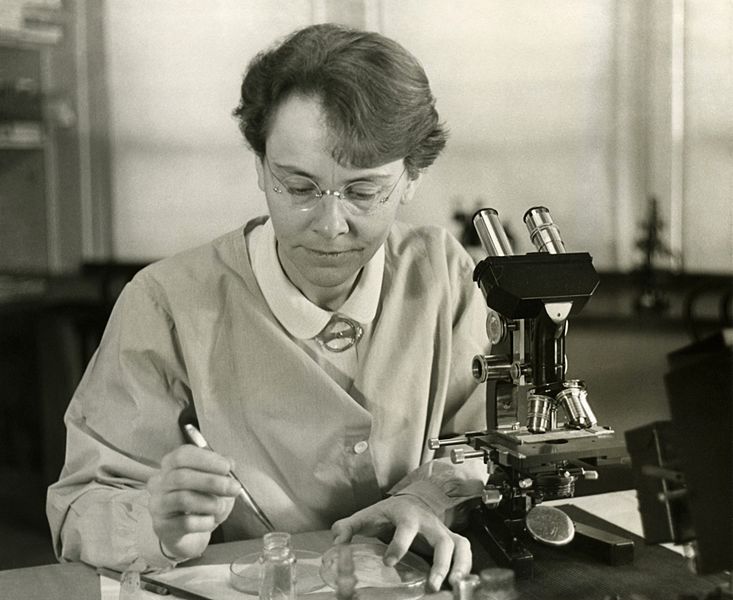
Several decades ago, a geneticist named Barbara McClintock was working with patterns of seed color inheritance in "Indian corn."  In this variety, one cob can bear seeds with dozens of different colors and patterns.  After much study, she concluded that her data could only be explained by there being "transposable elements" -- genetic sequences that were either clipped out and moved, or else copied and moved -- functions similar to the "cut-and-paste" and "copy-and-paste" commands on your computer. McClintock wrote a paper about it...

... and was immediately ignored.  For one thing, she was a woman in science, and back when she was doing her research -- in the 1960s and 1970s -- that was sufficient reason to discount it.  Her colleagues derisively nicknamed her theory "jumping genes" and laughed it into oblivion.

Except that McClintock wouldn't let it go.  She was convinced she was right, and kept doggedly pursuing more data, data that would render her conclusion incontrovertible.  She found it -- and won the Nobel Prize in Physiology and Medicine in 1983, at the age of 81.

Barbara McClintock in her laboratory at Cold Spring Harbor [Image licensed under the Creative Commons Smithsonian Institution/Science Service; Restored by Adam Cuerden, Barbara McClintock (1902-1992) shown in her laboratory in 1947]

McClintock's "transposable elements" (now called "transposons") have since been found in every vertebrate studied.  They are used to provide additional copies of essential genes, so that if one copy succumbs to a mutation, there's an extra working copy that can take over.  They're also used in gene switching.  Move a gene near an on-switch called a promoter, and it turns on; move it away, and it turns off.

The problem is, like any natural process, it can go awry.  The copy-and-paste function especially seems to have that tendency.  When it malfunctions, it acts like a runaway copy-and-paste would in your word processing software.  Imagine the havoc that would ensue if you had an important document, and the computer went haywire and inserted one phrase over and over again in random points in the text.

This should give you an idea of why it's so important to keep this process under control.

You have a way of taking care of these "rogue transposons" (as they're called).  One such mechanism is methylation, which is a chemical means of tangling up and permanently shutting down genes.  But the paper just released suggests that aging is (at least in part) due to the rogue transposition of one particular sequence getting ahead of methylation, leaving a particular chunk of DNA scattered again and again across the genome.

The current research, out of New York University, looked at a transposon called Long Interspersed Nuclear Element 1 (LINE-1) that has become especially good at this copy-and-paste trick, to the extent that the human genome contains five hundred thousand copies of it -- a full twenty percent of our genetic material.  The researchers found that LINE-1 can only accomplish this self-insertion when a molecule called ORF1p is present in sufficient quantities to assemble into clumps called condensates.  Find a way to block ORF1p, and LINE-1 is effectively disabled -- potentially slowing down age-related genetic malfunction.

Of course, even in the best-case scenario, it's unlikely that tweaking one molecule will affect overall aging in any kind of dramatic way.  Even so, the whole thing is tremendously interesting.  On the other hand, I have to say that the idea that we are getting to the point that we can tinker around with fundamental processes like aging is a little frightening.  It opens up practical and ethical issues we've never had to consider before.  How this would affect human population growth?  Who would have access to such genetic modifications if they proved effective and safe?  You can bet the rich would have first dibs (and the last thing we need is Rupert Murdoch living to two hundred years old.)  

Even such things as how we approach the idea of careers and retirement would require significant rethinking.  Imagine if you reached the age of sixty and could expect another fifty or more years of active health.  More staggering still is if the effect on humans was greater -- and the upper bound of human life span was increased to two hundred or three hundred years.  It seems like science fiction, but with the research that is currently happening, it's not outside of the realm of possibility.

Who would want to retire at sixty if you still had the physiology and mental acuity of a twenty-five year old?  At the same point, who would want to stay in the same job for another hundred years or more? 

The whole thing would require a drastic reorganization of our society, a far more pervasive set of changes than any scientific discovery has yet caused.  And lest you think that I'm exaggerating the likelihood of such an eventuality; remember how much progress has happened in biological science in the last century.  Only a hundred years ago, children in industrialized countries were still dying by the thousands of diphtheria and measles.  There were dozens of structures in cells, and a good many organs in humans, about whose function we knew essentially nothing.  We knew that DNA existed, but had no idea that it was the genetic material, much less how it worked.

Makes you wonder what our understanding will be in another hundred years, doesn't it?

And maybe some of the people reading this right now will be around to see it.

****************************************


Tuesday, November 26, 2024

Genetic walkabouts

Today's topic comes to us from the One Thing Leads To Another department.

I got launched into this particular rabbit hole by a notice from 23 & Me that they'd refined their analysis of their test subjects' DNA, and now had a bigger database to extract from, allowing them to make a better guess at "percent composition" not only by general region, but by specific sub-region.

So I took a look at my results.  My DNA came out 63.5% French, 25.3% Scottish and English, 6.4% Ashkenazi, and the remaining 4.8% a miscellany.  This works out to be pretty much what I'd expect from what I know of my family tree.  My mom was close to 100% French, but a great-grandfather of hers, one Solomon Meyer-Lévy, was a French Jew from Alsace and is the origin of the Ashkenazic DNA.  My dad was a bit of a hodgepodge in which French, Scottish, and English predominate.

So like I said, no surprises.  I'm a white guy of western European descent, which if you look at my profile photo, is probably not going to come as any sort of shock.

What I thought was more interesting was the regional breakdown.  The Scottish and English bits were especially interesting because I only have a handful of records documenting where exactly my British Isles forebears were from.  Apparently I have a cluster of genetic relatives around Glasgow, the London area, and Yorkshire.  Other than my dad's paternal family (which was from the French Alps, near Mont Blanc and the border of Italy) and my Alsatian great-great-grandfather, my French ancestry is all in western France; this lines up with what I know of my mom's family, which came from Bordeaux, Poitou, the Loire Valley, and Brittany.

So all of this shores up their claims to accuracy, because this was ascertained purely by my DNA -- I didn't send them my family tree, or anything.  But then this got combined with another random thing, which is that I've been reading a book called The Ancient Celts by anthropologist Barry Cunliffe, and I was kind of surprised at how much of Europe the Celts once ruled -- not only the British Isles and all of France (then called Gaul), but what is now Switzerland, southern Germany, Austria, the northern half of Italy, the eastern half of Spain, and down into a big chunk of the Balkans.  They seem to have been nothing if not inveterate wanderers, and their walkabouts took them just about everywhere in Europe but Scandinavia.  They were there for a long while, too; it was only when the Romans got their act together and started to push back that the Celts retreated; they were shoved farther west when first the Germanic tribes, and then the Slavs, moved in from the east and kind of kept moving.

[Image is in the Public Domain]

This all got me thinking, "Okay, when I say my ancestry is on the order of 2/3 French, what exactly am I saying?"  So I started doing some research into "the ethnic origin of the French," and I found out that it's not simple.  The western parts of France (whence my mom's family originated) are mostly of Celtic (Gaulish) ancestry.  People in the southeast, especially the lowlands near Marseilles, have a lot of Roman and Etruscan forebears.  When you get over into Languedoc -- the southwestern part of France, near the border of Spain -- there's an admixture not only from the Moors of North Africa, but from the Basques, who seem to be the remnants of the earliest settlers of Europe, and are the only ones in western Europe who don't speak an Indo-European language.  In Normandy there's a good admixture of Scandinavian blood, from Vikings who settled there a thousand years ago -- in fact, "Normandy" means "North-man-land."  Despite the fact that the name of the country and its people comes from a Germanic tribe (the Franks), the only place there's a significant amount of Germanic ancestry in France is in the east -- from Burgundy north into Alsace, Lorraine, and Picardy.

Apparently the only reason the French are Frankish is because the Franks ruled the place for a few hundred years, a bit the way the Normans did in England.  The common people, your average seventeenth-century peasants in Bordeaux, probably were nearly 100% Gaulish Celt.

So when I say my mom's family is French, and a guy from Lille and a woman from Marseilles say the same thing, what exactly do we mean?

And there's nothing unusual about the French in that regard; I just use them as an example because I happen to know more about them.  The same is true pretty much anywhere you look except for truly insular cultures like Japan, which have had very little migration in or out for millennia.  We're almost all composites, and ultimately, all cousins.  I remember when I first ran into this idea; that the further back you go, the more our family trees all coalesce, and at some point in the past every human on Earth could be sorted into one of two categories -- people who were the ancestors of every one of us, and people who left no living descendants.

That point, most anthropologists believe, is way more recent than most of us would suspect.  I've heard -- to be fair, I've never seen it rigorously proven, but it sounds about right -- that the two-category split for those of us with western European ancestry happened in around 1,200 C.E.  So pick out anyone from thirteenth century western Europe, and (s)he's either my ancestor, or (s)he has no descendants at all.

This brings up a couple of things.  First, "royal blood" is an idiotic concept from just about whichever angle you choose.  Not only does royal ancestry not confer fitness for leading a country -- let's face it, a lot of those kings were absolute loonies -- I can pretty much guarantee that I descend from Charlemagne, and if you have European ancestry, so do you.  My wife actually descends from an illegitimate child of King Edward IV of England (something she likes to remind me about whenever I get uppity), but the truth is, all of us have royal blood and peasant blood pretty well mixed indiscriminately.

Second, racism, ethnicism, and xenophobia are all equally ridiculous, since (1) we're virtually all genetic mixtures, (2) regardless of our ethnicity, our genetic similarities far outweigh our differences, and (3) we're all cousins anyhow.  I find that rather cool, honestly -- that a Zulu woman living in Botswana and I have common ancestry if you go back far enough.  Race is a cultural construct, not a genetic one, which you can see with extraordinary vividness if you take a DNA test, or if you read anything about the migration patterns humanity has taken since first leaving the East African savanna something like 250,000 years ago.

Anyhow, those are my musings about ethnicity, DNA, ancestry, and so on.  It all goes to show that we're wonderfully complex creatures, and the determination of some of us to see the world as if it was straightforward black-and-white is not only inaccurate, it misses a great deal of the most interesting parts of it.  As the brilliant science fiction writer Ursula LeGuin put it, "I never knew anybody who found life simple.  I think a life or a time looks simple only if you leave out the details."

****************************************


Monday, February 19, 2024

The viral accelerator

It's virus season, which thus far I've been able to avoid participating in, but seems like half the people I see are hacking and snorting and coughing so even with caution and mask-wearing I figure it's only a matter of time.  Viruses are odd beasts; they're obligate intracellular parasites, doing their evil work by hijacking your cellular machinery and using it to make more viruses.  Furthermore, they lack virtually all of the structures that cells have, including cell membranes, cytoplasm, and organelles.  They really are more like self-replicating chemicals than they are like living things.

Simian Polyoma Virus 40 [Image licensed under the Creative Commons Phoebus87 at English Wikipedia, Symian virus, CC BY-SA 3.0]

What is even stranger about viruses is that while some of the more familiar ones, such as colds, flu, measles, invade the host, make him/her sick, and eventually (with luck) are cleared from the body -- some of them leave behind remnants that can make their presence known later.  This behavior is what makes the herpes family of viruses so insidious.  If you've been infected once, you are infected for life, and the latent viruses hidden in your cells can cause another eruption of symptoms, sometimes decades later.

Even weirder is when those latent viral remnants cause havoc in a completely different way than the original infection did.  There's a piece of a virus left in the DNA of many of us called HERV-W (human endogenous retrovirus W) which, if activated, can trigger multiple sclerosis or schizophrenia.  Another one, Coxsackie virus, has an apparent connection to type-1 diabetes and Sjögren's syndrome.  The usual sense is that all viral infections, whether or not they're latent, are damaging to the host.  So it was quite a shock to me to read a piece of recent research that there's a viral remnant that not only is beneficial, but is critical for creating myelin -- the coating of our nerve cells that is essential for speeding up nerve transmission!

The paper -- which appeared last week in the journal Cell -- is by a team led by Tanay Ghosh of the Cambridge Institute of Science, and looked at a gene called RetroMyelin.  This gene is one of an estimated forty (!) percent of our genome that is made up of retrotransposons, DNA that was inserted by viruses during evolutionary history.  Or, looking at it another way, genes that made their way to us using a virus as a carrier.  Once inside our genome, transposons begin to do what they do best -- making copies of themselves and moving around.  Most retrovirus-introduced elements are deleterious; HIV and feline leukemia, after all, are caused by retroviruses.  But sometimes, the product of a retroviral gene turns out to be pretty critical, and that's what happened with RetroMyelin.

Myelin is a phosopholipid/protein mixture that surrounds a great many of the nerves in vertebrates.  It not only acts as an insulator, preventing the ion distribution changes that allow for nerve conduction to "short-circuit" into adjacent neurons, it is also the key to saltatory conduction -- the jumping of neural signals down the axon, which can increase transmission speed by a factor of fifty.  So this viral gene acted a bit like a neural accelerator, and gave the animals that had it a serious selective advantage.

"Retroviruses were required for vertebrate evolution to take off," said senior author and neuroscientist Robin Franklin, in an interview in Science Daily.  "There's been an evolutionary drive to make impulse conduction of our axons quicker because having quicker impulse conduction means you can catch things or flee from things more rapidly.  If we didn't have retroviruses sticking their sequences into the vertebrate genome, then myelination wouldn't have happened, and without myelination, the whole diversity of vertebrates as we know it would never have happened."

The only vertebrates that don't have myelin are the jawless fish, such as lampreys and hagfish -- so it's thought that the retroviral infection that gave us the myelin gene occurred around the same time that jaws evolved on our branch of the vertebrate family tree, on the order of four hundred million years ago.

So even some fundamental (and critical) traits shared by virtually all vertebrates, like the myelin sheaths that surround our neurons, are the result of viral infections.  Just proving that not all of 'em are bad.  Something to think about the next time you feel a sore throat coming on.

****************************************


Thursday, January 4, 2024

Going to the dogs

I understand dogs a great deal better than I understand my fellow humans.

Dogs are straightforward.  They interact with their world in a direct way, whether it be motivated by love, anger, curiosity, hunger, enthusiasm, or fear.  There's nothing feigned about a dog's emotions or the way they express them.  I've sometimes misinterpreted one of my dogs' signals, but that's on me; the signals were there, even if I only recognized them in retrospect.  Once you grok dog behavior, it's much less fraught than the complex, confusing morass of human interaction.

This is why when I'm invited to social events, I'm always hoping the host will have a dog so there'll be someone for me to have a conversation with.

The dogs we've had have nearly all been rescues, and came with all the baggage and bad backstories that rescue dogs have, but one and all were and are wonderful companions, and enriched our lives tremendously.  This latter part is the only possible explanation for why during the holidays, my wife and I were looking around and thinking, "Wow, our house sure has a lot of clutter and dirt and chaos.  We never seem to be able to keep up with the housekeeping.  Hey, I know... let's get a puppy!"

So, without further ado, allow me to introduce to the Skeptophilia readership...

... Jethro.


Jethro is -- and I say this with all modesty and restraint -- the cutest puppy in the whole entire world.  He's five months old, has the sweetest, happiest disposition ever, and soft, silky hair that gathers burs, mud, and debris like some sort of bizarre magnet.  Like many puppies, he has two settings -- "Full Throttle" and "Off."

He's currently set at "Off" and is sleeping at my feet, which is the only way I'm able to write this.  Otherwise I would be engaged in the essential task of Playing With Jethro.

We got him from the amazing Stay Wild Rescue and Wildlife Rehabilitation Center on New Year's Eve.  If you are looking for a wonderful and deserving place to make a donation, please consider Stay Wild.  They do fantastic work on a shoestring budget, and the owners -- Jane George and Dan Soboleski -- work tirelessly to help find rescue pets forever homes, and to rehabilitate wild animals for re-release.  Please check out their website and consider supporting them.

In the few days we've had Jethro, he's already bonded with our other two dogs, Guinness and Rosie.  Rosie is an Australian Cattle Dog mix who pretty much loves everyone, so she was easy.

Guinness is a big galumphing American Staffordshire Terrier/Husky/Chow cross who can be cranky and gets jealous easily, especially when it comes to sharing Carol's attention with anyone, because he's a big ol' Mama's Boy.  He is, however, a very natty dresser. 


But yesterday, all three of them were romping around together in the back yard, and Guinness was letting Jethro chase him like they'd been best friends forever instead of just three days.  Guinness even responded with the doggie "play-bow" before they took off running again.

Like with most rescues, we're not sure what kind of a mix Jethro is.  Jane at Stay Wild said she thought he had some Golden Retriever in him, which makes sense given his silky coat and general head shape, but his striking and beautiful black face and brindle coloration have to come from somewhere else.  He's got huge paws, indicating he's got some serious growing to do, but whether he'll turn out to be long and lanky or barrel-chested and stocky is anyone's guess.  Dog-loving friends of mine have speculated a lot of possible contributions to his ancestry -- suggestions have included various spaniels and setters, Border Collie, Boxer, German Shepherd, even Saint Bernard -- but we won't be sure until we have him DNA-tested.  (The kit has already been ordered.)

A photo of Jethro from five minutes ago, because why not

It's tempting to say his lovable, playful temperament is indicative of his Golden Retriever genes, but a surprising study at the University of Massachusetts just last year found the contribution of breed to behavior is way smaller than most people think.  We often associate particular behavioral traits with certain types of dog -- labs are friendly and loyal, hounds laid-back but stubborn, Dalmatians nervous and prone to biting, and so on -- but the researchers found exceptions to the rule are so common that the rule isn't really a rule.  And while we've had dogs who seemed to conform to the breed expectations, all of them have their own unique characteristics and quirks.

Dogs are as varied in personality as people are, I suppose.

In any case, now we've got three dogs.  I commented yesterday that this means we're outnumbered, and that it's a good thing this is a benevolent dictatorship and not a democracy.  Although a friend of mine responded, "I'm sure your dogs would vote for you anyway."

Given the fact that Jethro is snoozing happily right next to me, I suspect my friend is right.

****************************************


Tuesday, January 2, 2024

The biochemical zoo

The human/alien hybrid is a common trope in science fiction.  From the angst-ridden half-Vulcan Mr. Spock, to the ultra-competent and powerful half-Klingon B'Elanna Torres, to the half-Betazoid empath Deanna Troi, the idea of having two intelligent humanoid species produce children together is responsible for dozens of plot twists in Star Trek alone.

Much as I love the idea (and the show), the likelihood of a human being able to engage in any hot bow-chicka-bow-wow with an alien, and have that union produce an offspring, is damn near zero.  Even if the two in question had all the various protrusions and indentations more or less lined up, the main issue is the compatibility of the genetic material.  I mean, consider it; it's usually impossible for two ordinary terrestrial species to hybridize -- even related ones (say, a Red-tailed Hawk and a Peregrine Falcon) are far enough apart genetically that any chance mating would produce an unviable embryo.

Now consider how likely it is to have genetic compatibility between a terrestrial species and one from the fourth planet orbiting Alpha Centauri.

Any hope you might have had for a steamy tryst with an alien was smashed even further by a study that came out of a study from the Tokyo Institute of Technology, Emory University, and the German Aerospace Center.  Entitled, "One Among Millions: The Chemical Space of Nucleic Acid-Like Molecules," by Henderson James Cleaves II, Christopher Butch, Pieter Buys Burger, Jay Goodwin, and Markus Meringer, the study shows that the DNA and RNA that underlies the genetics of all life on Earth is only one of millions of possible information-encoding molecules that could be out there in the universe.

It was amazing how diverse these molecules were, even given some pretty rigid parameters.  Restricting the selection to linear polymers (so the building blocks have to have attachment points that allow for the formation of chains), and three constituent atoms -- carbon, hydrogen, and oxygen, like our own carbohydrates -- the researchers found 706,568 possible combinations (counting configurations and their mirror images, pairs of molecules that are called stereoisomers).  Adding nitrogen (so, hooking in chemicals like proteins and the DNA and RNA nitrogenous bases, the letters of the DNA and RNA alphabets) complicated matters some -- but they still got 454,442 possible configurations.

The results were a surprise even to the researchers.  "There are two kinds of nucleic acids in biology, and maybe twenty or thirty effective nucleic acid-binding nucleic acid analogs," said Henderson James Cleaves, who led the study, in an interview in SciTechDaily.  "We wanted to know if there is one more to be found...  The answer is, there seem to be many, many more than was expected."

Co-author Pieter Burger of Emory University is excited about the possible medical applications of this study.  "It is absolutely fascinating to think that by using modern computational techniques we might stumble upon new drugs when searching for alternative molecules to DNA and RNA that can store hereditary information," Burger said.  "It is cross-disciplinary studies such as this that make science challenging and fun yet impactful."

While I certainly can appreciate the implications of this research from an Earth-based standpoint, I was immediately struck by its application to the search for extraterrestrial life.  As I mentioned earlier, it was already nearly impossible that humans and aliens would have cross-compatible DNA, but now it appears that alien life might well not be constrained to a DNA-based genetic code at all.  I always thought that DNA, or something very close to it, would be found in any life form we run across, whether on this planet or another; but the Cleaves et al. study suggests that there are a million or more other ways that organisms might spell out their genetic code.

So this drastically increases the likelihood of life on other planets. The tighter the parameters for life, the less likely it is -- so the discovery of a vast diversity of biochemistry opens up the field in a manner that is breathtaking.


... but the chance that the aliens will look like this is, sadly, pretty low.

This raises the problem of whether we'll recognize alien life when we see it.  The typical things you look for if you're trying to figure out if something's alive -- such as a metabolism involving the familiar organic compounds all our cells contain -- might cause us to overlook something that is alive but is being carried along by a completely different chemistry.

And what an organism with that completely different chemistry might look like -- how it would move, eat, sense its environment, reproduce, and think -- well, there'd be an embarrassment of riches.  The possibilities are far beyond even the Star Trek universe, with their fanciful aliens that look basically human but with odd facial structures and funny accents.

The whole thing boggles the mind.  And it further reinforces a conclusion I've held for a very long time; I suspect that we'll find life out there pretty much everywhere we look, and even on some planets we'd have thought completely inhospitable.  The "Goldilocks Zone" -- the region surrounding a star where orbiting planets would have conditions that are "just right" for life to form -- is looking like it might be a vaster territory than we'd ever dreamed.

****************************************