[R]ice viruses inhibit methyl salicylate (MeSA) emission, impairing parasitoid recruitment and promoting vector persistence. Field experiments demonstrate that MeSA, a key herbivore-induced volatile, suppresses vector populations by attracting egg parasitoids. Viruses counter this by targeting basic-helix-loop-helix transcription factor OsMYC2, a jasmonic acid signaling hub, thereby down-regulating OsBSMT1 and MeSA biosynthesis, responses conserved across diverse rice viruses and vector species.
Saturday, January 10, 2026
Who benefits?
Thursday, July 17, 2025
Who benefits?
One of the most curious features of evolutionary biology is the cui bono principle.
Cui bono? is Latin for "who benefits?" and is an idea that found its first expression in courts of law. If a crime is committed, look for who benefitted from it. In evolutionary biology, it's adjuring the researcher to look for an evolutionary explanation for seemingly odd, even self-harming behavior. Somebody, the principle claims, must benefit from it.
A while back, I did a post on one of the strangest and most complex examples of cui bono; the pathogen Toxoplasma gondii, a protist that primarily infects humans, cats, rats, and mice. In each, it triggers changes in behavior, but different ones. It turns rats and mice fearless, and in fact, makes them attracted to the smell of cat urine. Infected cats are more gregarious and needing of physical contact (either with other cats or with humans). Humans are more likely to be neurotic and anxious, impelling them to seek comfort from others... including, of course, their pets. Each of these behaviors increases the likelihood of the pathogen jumping to another host.
That this behavioral engineering is successful can be gauged by the fact that by some estimates three billion people are Toxoplasma-positive. Yes, that's "billion" with a "b." As in, one third of the human population. I can pretty much guarantee that if you've ever owned a cat, you are Toxoplasma-positive.
What effects that has had on the collective behavior of humanity, I'll leave you to ponder.
I just ran into another cool example of cui bono a couple of days ago -- well, cool if you're not a tomato grower. This is another one for which the answer to "who benefits?" turns out to be a pathogen, this time a virus called tomato yellow leaf curl virus, which has the obvious effect on infected plants.
The researchers, led by Peng Liang of the Chinese Academy of Agricultural Sciences, noticed a strange pattern; there's a pest of tomato plants (and many other crops) called the silverwing whitefly (Bemisia tabaci) that shows a distinct preference for tomato plants depending on who is infected with what. If the whitefly is uninfected with the virus, it's preferentially attracted to infected tomato plants; if the whitefly is already infected, it shows a preference for uninfected plants.
So cui bono? The virus, of course. Infected whiteflies pass the virus along to uninfected plants, and uninfected whiteflies pick the virus up from infected plants. Clever. Insidious, but damn clever.
Liang et al. found that the virus accomplishes this by meddling with a chemical signal from tomato plants called β-myrcene. The virus actually up-regulates the β-myrcene gene -- essentially, turning the volume up to eleven on β-myrcene's production -- which attracts uninfected whiteflies. Once the virus gets into the whiteflies, it dials down the sensitivity of the whiteflies' β-myrcene receptors, making them less attracted to it.
No need to be lured in by the infected plants if you're already infected yourself.
So like with Toxoplasma, we have here a microscopic pathogen that is manipulating the behavior of more than one host species. It's fascinating but creepy. You have to wonder what other features of our behavior are being steered by pathogens we might not even be aware of. Recent studies have found that between five and eight percent of our DNA is composed of endogenous retroviruses -- scraps of DNA left behind by viruses in the genomes of our forebears, and which are suspected to have a role in multiple sclerosis and some forms of schizophrenia.
Who knows what else they might be doing?
If you find this whole topic a little shudder-inducing, you're not alone. Science is like that sometimes. If there's one thing I've learned, it's that the universe is under no compulsion to make me feel comfortable. If you agree, sorry I put you through reading this. Go cuddle with your kitty.
I'm sure that'll make you feel better.
Saturday, January 21, 2023
Tooth and claw
Aficionados of The X Files will no doubt recall "Field Trip," which ranks amongst the creepiest, twistiest, most atmospheric episodes they ever did. Fox Mulder and Dana Scully are charged with investigating the disappearance of a young couple while on a hiking trip -- and after that, their mantra "Trust nothing and no one" becomes literally true.
Until there's nothing left of you to fight back.
While the details of the episode are fiction, nature itself has plenty of examples that are just as horrifying. The pathogen Toxoplasma gondii, common not only in humans but in domestic cats, wild mice, and rats, alters the brains of the hosts, but each in its own way. Rats and mice become unafraid of predators, and in fact become attracted to the scent of cat urine; cats and humans become more affectionate -- and neurotic. Each of those alterations in behavior is engineered by the parasite to maximize its chances of jumping to another host. Lancet worms (Dicrocoelium dendriticum) parasitize ground-dwelling ants, and induce them to climb blades of grass and simply wait there, because the worm has a second stage of its life cycle in which it has to pass through the digestive tract of a ruminant, like a deer or a cow. So it basically triggers the ant to commit suicide so it can make the jump. Worse of all -- and most like the fungus in "Field Trip" -- there are the baculoviruses, which infect caterpillars. Once parasitized, the caterpillars become attracted to sunlight, so they climb to the very tops of tree branches, where they die. And then explode, showering their comrades lower down in the tree with viral particles.
Another way that "Field Trip" got it right, though, was some of the nasty stuff pulled by members of kingdom Fungi. You have to wonder how we ever figured out that any of them were edible:
This, in fact, is why the topic comes up; a new study of oyster mushrooms (Pleurotus ostreatus) found that the underground mycelium (network of root-like tubes) of the species actually hunts and kills nematodes (roundworms) using something one of researchers described as "a lollipop filled with nerve gas." The toxocysts, as the lollipops are called, are consumed by the nematodes, and when they burst, it releases a chemical called 3-octanone, which triggers calcium to flow into the muscles of the worm. This paralyzes it -- and the fungus has dinner.
Oyster mushrooms aren't the only species that goes after nematodes. It makes sense to choose them as prey; nematodes are one of most numerous animals in the world. I still recall my invertebrate zoology professor grossing us all out (something he specialized in) by telling us that if you made all organic matter disappear except for nematodes, you could still see where all the other life forms were by the haze of parasitic nematodes they'd been carrying, outlining where they'd been like some kind of ghostly remnant of their bodies.
But the fungi still maintain the upper hand. There are fungi which have evolved harpoons for skewering nematodes. Others create what amount to glue traps. One species produces something like a spiked collar -- with the spikes pointing inward. The weirdest one is the fungus Arthrobotrys oligospora, which creates a noose. When a nematode crawls through the noose, the loop suddenly inflates, strangling the hapless worm, which is then digested.
Nature is red in tooth and claw, man. And it's not just the animals. Remember the first line of Stephen King's wonderful novel The Girl Who Loved Tom Gordon: "The world had teeth, and could bite you with them any time it wanted."
Truer words never spoken.
Anyhow, I've probably skeeved you out sufficiently for one day. Just think about all this next time you see innocent-looking little mushrooms popping up in your lawn.
You never know what's going on beneath the surface.
Monday, May 16, 2022
Nice smile!
Back in December, I completely skeeved out some of my readers with a discussion of parasites, more specifically the protist Toxoplasma gondii. Toxoplasma causes the disease toxoplasmosis, and a number of mammalian species are hosts, most notably cats, humans, and rats. It's the cat/human connection that is why you've probably heard that pregnant women shouldn't clean cat litter boxes; contact with an infected cat's urine can transmit the parasite to a human, and Toxoplasma is associated with birth defects in human infants.
More interesting, though, are its behavioral effects. In December's post, I described how toxoplasmosis alters the behavior of all three of its main hosts -- it makes cats more affectionate, humans more neurotic, and rats more fearless, all three of which serve the evolutionary function of increasing the likelihood that the pathogen will jump to another host. (The cats seek out human company; the humans crave the comfort that pets can give; and the rats become unafraid of predators. In fact, some studies have even shown that infected rats are actively attracted to the scent of cat urine.)
Which is creepy enough. The idea that a brain parasite is, at least in some respects, in the driver's seat of our emotional state is a little unsettling. Or maybe I'm only saying that because I've got it myself, having had cats off and on for pretty much my entire adult life. But I'm not indulging in hypochondria, here; if you've ever owned a cat, especially one allowed outdoors, your chances of having a Toxoplasma infection is nearly 100%. Kevin Lafferty, a microbiologist who is one of leading experts on Toxoplasma, estimates that there are three billion people in the world who have it.
Yes, that's "billion" with a "b." As in just shy of 40% of the world's population,
But now another filigree of "holy shit, that is freaky" has been added to this already bizarre pathogen. A team made up of Javier Borráz-Léon and Markus Rantala (of the University of Turku), Indrikis Krams (of the University of Latvia), and Ana Lilia Cerda-Molina (of the Instituto Nacional de Psiquiatría of Mexico City) found out that not only does Toxoplasma change our personalities, it changes our appearance.
The idea came from the fact that in other mammals, Toxoplasma can be spread through sexual contact, so there was no reason to believe the same couldn't be true of humans. The researchers wondered if -- given that the parasite is pretty damn good at engineering its hosts to do things that pass it on -- there might be some way that being Toxoplasma-positive increased your likelihood of having sex.
And hoo boy, what they found.
They took a large test sample of infected and uninfected individuals, and rated them (or had others rate them, as the case may be) for a variety of features -- attractiveness (both self-perceived and as perceived by others), perception of healthiness, number of sexual partners, number of minor ailments, body mass index, mate value, handgrip strength, facial fluctuating asymmetry (i.e. asymmetry in features that change, such as how you smile), and facial width-to-height ratio, all of which could feasibly connect to sexual attractiveness.
Some of the features (like handgrip strength and minor ailment susceptibility) showed no statistically significant difference. But... well, let me quote you directly from the paper, so you don't think I'm making this up:[We] found that infected men had lower facial fluctuating asymmetry whereas infected women had lower body mass, lower body mass index, a tendency for lower facial fluctuating asymmetry, higher self-perceived attractiveness, and a higher number of sexual partners than non-infected ones. Then, we found that infected men and women were rated as more attractive and healthier than non-infected ones... The present study offers novel evidence supporting the idea that some sexually transmitted parasites such as T. gondii may produce changes in the appearance and behavior of the human host, either as a by-product of the infection or as a result of the manipulation of the parasite to increase its spread to new hosts.
**************************************

Saturday, December 18, 2021
Catty behavior
A study done a while back by Kevin Lafferty, of the University of California, suggests that as many as three billion people may have a dormant Toxoplasma infection. Yes, dear readers, you read that right; that's three billion with a "b," as in a little less than half of the human population. Turns out that Lafferty's research indicated that when you get toxoplasmosis, you get flu-like symptoms for a couple of days, and then the symptoms abate -- but for most of us, the protist goes dormant, and we carry around the parasite for life.
This is creepy enough, but wait'll you hear what it does to you.
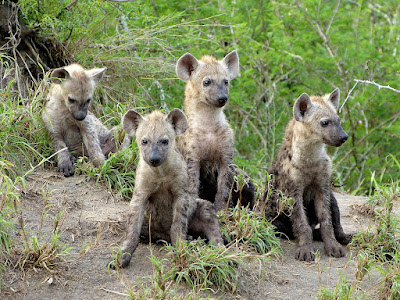
Lafferty's research showed that in mammalian hosts, the Toxoplasma organism invades, and becomes dormant in, the host's brain cells. Not only hyenas become bolder around predators; mice and rats do, as well, aiding in the passage of the germ between rodents and domestic cats. Lafferty's study, though, goes a step further, and looks at what latent Toxoplasma infection does to humans -- and he found it seems to cause significant personality changes.
Now, it doesn't make us have a high affinity for cats, which would make sense, and would explain Crazy Cat Lady Syndrome, in which some people think it's normal to own thirty cats, and somehow seem immune to the truly cataclysmic odor that their houses attain. No, what actually happens is more subtle. Apparently, if you have Toxoplasma, you're more likely to be neurotic. People who tested positive for antibodies for Toxoplasma scored far higher on personality assessments in the areas of guilt-proneness, anxiety, and risk of depression. These effects were so pronounced that Lafferty speculates that it could account for certain differences between cultures.
"In some cultures, infection is very rare," Lafferty said, "while in others, virtually everyone is infected. The distribution of Toxoplasma gondii could explain differences in cultural aspects that relate to ego, money, material possessions, work, and rules."
I find this speculation fascinating. The idea that my neuroses might not be due to my genes or upbringing, but because I'm carrying around a parasite in my brain, doesn't create the level of Icky-Poo Factor that you might expect. Of course, I'm a biologist, and so I'm at least on some level accustomed to thinking about creepy-crawlies. But the idea that some sort of a microorganism could affect my behavior strikes me as weirdly interesting, particularly since I've had at least one cat in my household for a significant chunk of the past forty years.
So, maybe our personalities aren't as static as we'd like to think -- they can be influenced by a great many circumstances outside of our control. Add parasite infestations to that list. And if that whole idea upsets you too much, take comfort in the fact that Lafferty's research has spurred medical researchers to try to find a drug that can destroy the germ. Nothing's been certified for human use so far, so don't cancel your appointment with your therapist just yet, but there are a couple that are looking promising. What's uncertain is whether, if the pathogen were eradicated, it would reverse the changes in the brain -- if, for example, nervous, neurotic people would find themselves less anxiety-prone -- or if the alterations in the brain are more or less permanent. But I, for one, would volunteer to give it a try, once (or if) the medication becomes available.
Until then, you should probably shouldn't worry. What's a few brain parasites among friends, after all? In fact, just forget I brought it up. Relax, go and sit in your recliner, and pet your cat, Mr. Fluffkins, for a while.
You'll feel better. Trust me.